10 Facts About the Beatles’ ‘Revolver’ You Might Not Know
In the decades since the release of Revolver, much has been learned about how the Beatles made their seventh studio album.
We now know about the various groundbreaking recording techniques the Beatles utilized back then in 1966 — things like reversed tapes, artificial double tracking, varispeed and microphone placement.
In May of 1966, John Lennon was asked by NME what could be expected from the band's upcoming recording sessions.
"Literally anything," he replied. "One thing's for sure — the next LP is going to be very different."
And it most definitely was, but for the purposes of this article, we're going to focus on some other, lesser-known facts about Revolver.
1. The Beatles Originally Wanted to Record the Album at Stax in Memphis
Like many other recording artists of their era, the Beatles were fans of the music coming out of Stax Studio in Memphis, home of legends like Otis Redding, Isaac Hayes, Booker T. & the M.G.'s and more.
Naturally, the Beatles were interested in working out of that same space, and more specifically to work with producer and co-owner of the label Jim Stewart. But unfortunately, things didn't pan out. One possible reason was that the Beatles needed more security than Stax could handle, but there was also a letter George Harrison wrote in May of 1966 that cited financial concerns.
"We would all like it a lot," he wrote, "but too many people get insane with money ideas at the mention of the word 'Beatles,' and so it fell through!"
Ultimately, the Beatles recorded Revolver at EMI Studios in London, which would later be renamed Abbey Road Studios in 1976.
"EMI was our home, and we didn’t have to deal with anything other than making the record," Paul McCartney said in a 2022 interview. "If you're in a strange studio there's things you got to deal with, as you're getting used to the new surroundings and so on. At EMI we knew the space and the people, so it was just a case of concentrating on making the record."
2. The Man Who Took the Back Cover Photograph Also Took the Beatles' Infamous 'Butcher' Photo
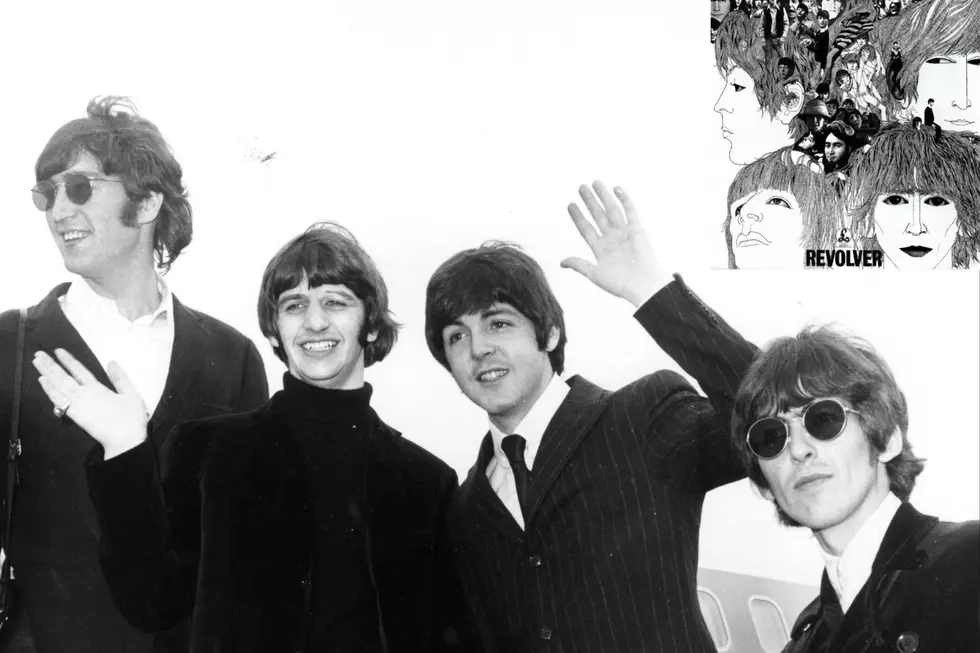
We're all familiar with the front cover of Revolver, designed by a close friend of the Beatles, Klaus Voormann.
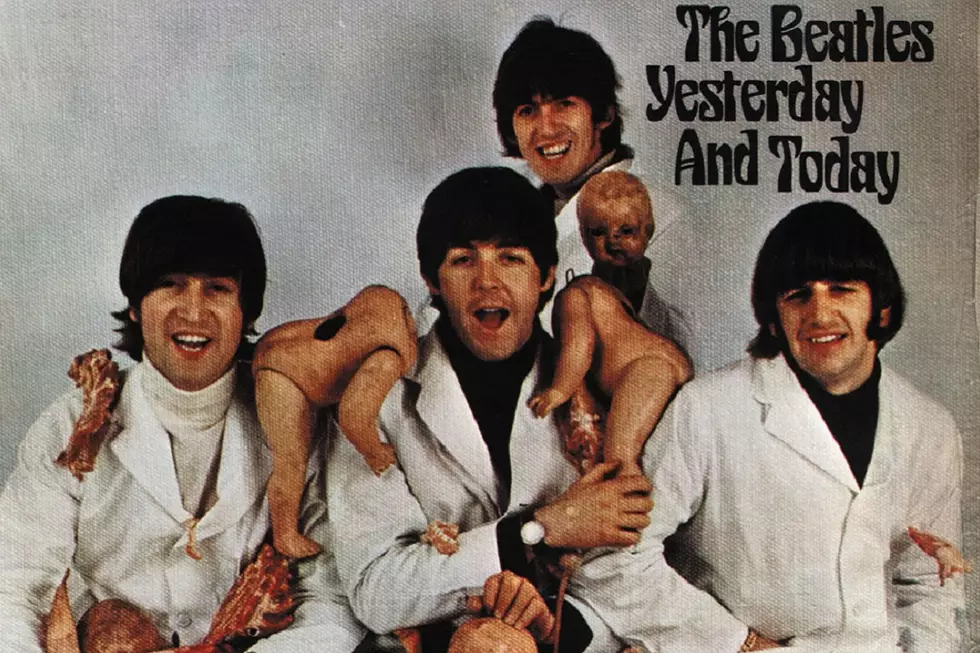
If you turn your attention to the back cover, you'll see the Fab Four in black-and-white, all wearing various kinds of eyeglasses. Robert Whitaker took that photo, the same man who took the "Butcher Cover" photo, which appeared on the Beatles' 1966 album Yesterday and Today, released in America only. (Whitaker photographed the band for a little over two years, traveling with them on multiple tours.)
3. The Guitar Solo in 'Taxman' Was Not Played by George Harrison
In a lot of bands, the roles are set — so and so plays this instrument, so and so plays that instrument. But the Beatles were the sort to switch things around if it served the song, which is what happened with "Taxman." That's McCartney playing the lead guitar solo, not Harrison.
"I was pleased to have him play that bit on 'Taxman,'" Harrison later said. " If you notice, he did like a little Indian bit on it for me."
4. The Revolving Door of Influences: Brian Wilson Edition
Alright, follow the chain of influence here. When Brian Wilson of the Beach Boys heard the Beatles' 1965 album Rubber Soul, it sowed seeds of inspiration that led him to write Pet Sounds.
Then, once the Beatles heard Pet Sounds, the influence flipped back around again — McCartney loved "God Only Knows" and was in turn inspired to write "Here, There and Everywhere," a ballad that appears roughly halfway through Revolver.
Listen to the Beatles' 'Here, There and Everywhere'
5. Peter Fonda's Lyrical Contribution
Speaking of influences, at least part of the lyrical inspiration for "She Said She Said" came from a conversation Lennon had with the actor Peter Fonda while tripping on acid. It was at a party in California where a variety of people were present, including members of the Byrds.
At some point in the evening, Fonda told people that he knew what it was like to be dead — when he was a child, an accidental, self-inflicted gunshot incident led him to technically die on the operating table in a hospital.
"We didn't want to hear about that!" Lennon would later recall in a 1980 interview with David Sheff. "We were on an acid trip and the sun was shining and the girls were dancing and the whole thing was beautiful and Sixties, and this guy – who I really didn't know; he hadn't made Easy Rider or anything – kept coming over, wearing shades, saying, 'I know what it's like to be dead,' and we kept leaving him because he was so boring! ... It was scary. You know ... when you're flying high and [whispers] "I know what it's like to be dead, man."
READ MORE: The 'Big 4' of Beatles Albums
6. A Little Help From Donovan on 'Yellow Submarine'
Ringo Starr's shining moment arrives on side one of Revolver: the delightfully bubbly "Yellow Submarine." While Lennon and McCartney were the primary songwriters, another iconic '60s figure played a role in its creation.
McCartney paid a visit to Donovan around this time, who made a lyrical suggestion for the song.
"It was a very small part, and I just went into the other room and put together 'Sky of blue, sea of green,'" Donovan recalled in a late '80s interview. "They had always asked other people for help with a line or two, so I helped with that line. He knew that I was into kids' songs, and he knew I could help. I'm sure he could have written the line himself, but I suppose he wanted someone to add a line, and I added a line."
Listen to the Beatles' 'Yellow Submarine'
7. The French Horn Solo
The other thing to know about the Beatles is that when they found a session musician they liked, they tended to call them back for other projects. Such was the case with a man named Alan Civil, who played the French horn solo in "For No One." That made him one of only five session musicians ever to get a named credit on a Beatles recording.
The following year, Civil played on "A Day in the Life" from Sgt. Pepper's Lonely Hearts Club Band.
8. The Alternative Titles for 'Revolver'
Allow us to list some of the other title ideas that were floated for Revolver: Abracadabra, After Geography (a riff off the Rolling Stones' Aftermath), Bubble and Squeak, Beatles on Safari, Freewheelin' Beatles (a clear nod to The Freewheelin' Bob Dylan) and Pendulum.
9. Lennon's Jesus Comments Led to the Promotion of 'Yellow Submarine' Instead
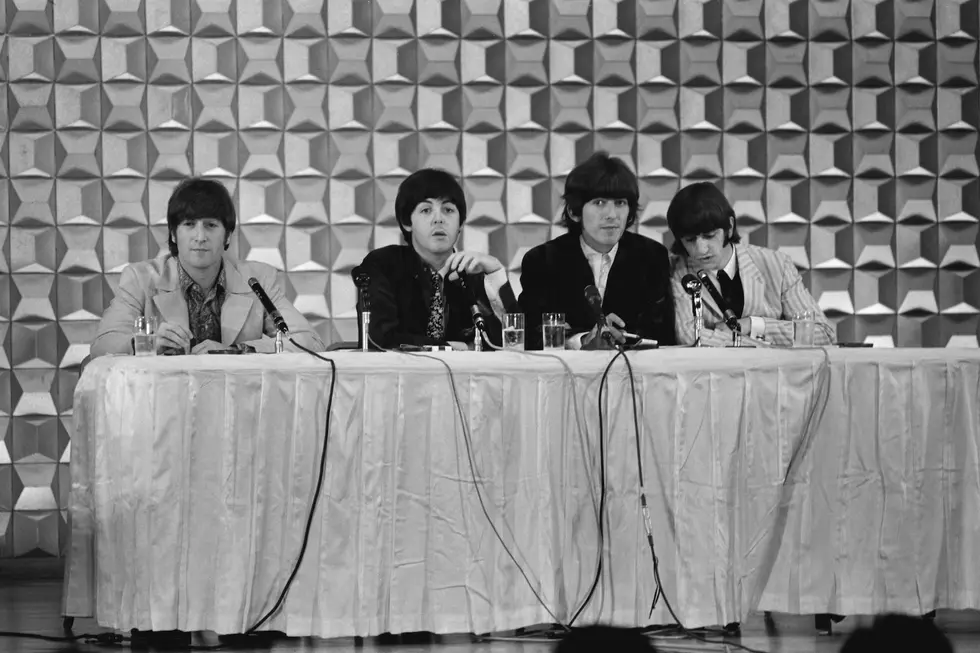
If you're familiar with the history of the Beatles, then you likely know all about Lennon's infamous "more popular than Jesus" comments from March of 1966. This controversy actually led to some adjustment of promotion in America.
In the U.K., "Eleanor Rigby" was the preferred single, but because of its religious references, Capitol Records in the U.S. chose to push "Yellow Submarine" instead. That worked out in their favor, since the song went to No. 2 on the Billboard Hot 100.
10. It Was Nominated for Album of the Year, But Lost to...
...Frank Sinatra.
At the Grammy Awards in 1967, Revolver ultimately did not win Album of the Year. Instead the award went to Sinatra's A Man and His Music. They did, however, win Song of the Year for "Michelle" from Rubber Soul.
The Best Song From Every Beatles Album
Gallery Credit: UCR Staff
